

Children in Denmark can receive their own tax report (årsopgørelse). This guide explains when it happens, what parents should check, and how to avoid unnecessary tax surprises.
Many parents are surprised the first time their child receives an årsopgørelse. A child may not have a full-time job, a business, or adult financial responsibilities — but if income is registered under the child’s CPR number, the Danish tax system may still create a tax report.
The basic principle is simple: Danish taxation is based on income, not age. That means children and young people may have tax-relevant information if they have a part-time job, savings interest, investments, pension income, or income from online activities such as gaming, YouTube, social media, or freelance work.
This article gives parents a practical overview of what to look for, how to access the child’s tax information, and when it may be worth getting help.
Disclaimer: This article is general information only and does not replace individual tax advice. If your child has foreign income, investments, pension income, or business-like activity, the case should be reviewed separately.
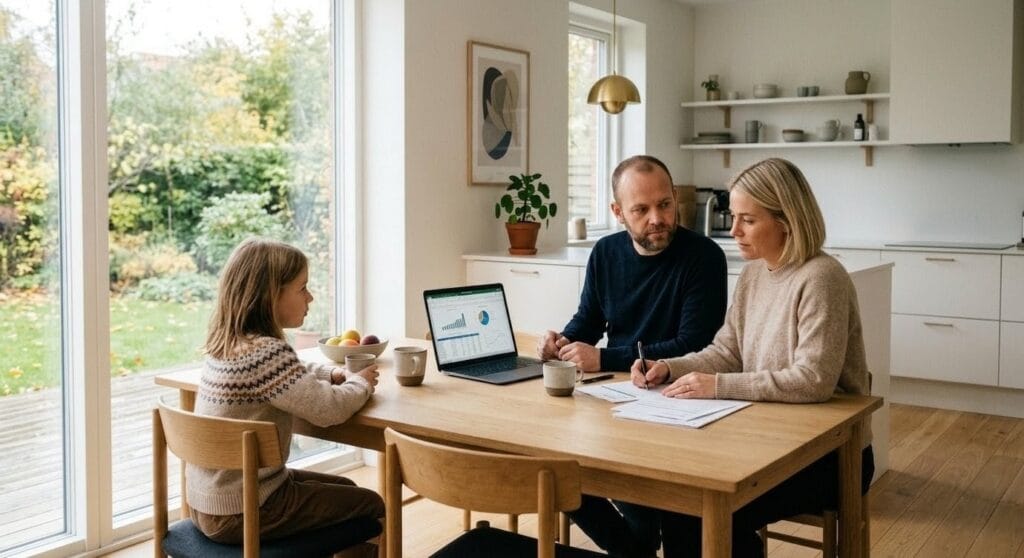
When does a child get a tax report in Denmark?
A child can receive an annual tax report if the Danish Tax Agency has information showing that the child has taxable income. From 2025, this can apply regardless of the child’s age. In 2026, the general age for automatically receiving an annual tax report is also lowered to 13.
Typical situations include:
- income from a part-time job or first job
- shares, ETFs, funds, dividends, gains or losses
- interest from savings or bank accounts
- pension payments, for example after a deceased parent
- income from gaming, e-sport, YouTube, influencer work or similar online activity
- foreign income or income paid from outside Denmark
You can read more on the Danish Tax Agency’s page about children and annual tax reports.
Who is responsible for the child’s tax matters?
Parents have an important responsibility. As a parent, you are expected to help check the child’s tax information, correct errors and contact the Danish Tax Agency if the child has taxable income but no preliminary income assessment or annual tax report has been created.
This is especially important for younger children, because the child may not have MitID or may not understand the tax consequences of registered income. Even where the child is old enough to log in, parents should still make sure the information is reasonable and complete.
How to access your child’s tax report
In most cases, parents can access the child’s tax information through TastSelv using authorisation. The practical steps are usually:
- Log in to TastSelv on skat.dk.
- Choose the option to log in with authorisation.
- Select your child’s CPR number.
- Open and review the child’s årsopgørelse or forskudsopgørelse.
Notifications are usually sent via Digital Post, so it is important to check messages regularly. If a refund is due, the child should also have a NemKonto registered.
Frikort, part-time jobs and personal allowance
Many children and young people use a frikort, which means that they can earn up to a certain amount without paying ordinary income tax. According to the Danish Tax Agency, the frikort amount is generally 54,100 DKK in 2026 and was 51,600 DKK in 2025.
For children with a first job or part-time job, the employer normally receives the tax card digitally. If the expected income is wrong, the preliminary income assessment should be updated. Parents can help check and update the information in TastSelv.
There is also a practical change from 2026: wage income is generally only subject to labour market contribution (AM-bidrag) from the year the young person turns 18. The exact treatment depends on the type of income, so it is still important to check the tax report instead of assuming that all child income is tax-free.
You can read more on the Danish Tax Agency’s page about part-time jobs and frikort.
What income can appear on a child’s tax report?
The most common income type is salary from a part-time job. However, many tax reports for children are triggered by something else: investments, interest, dividends, or financial products opened by parents or grandparents in the child’s name.
Parents should pay particular attention to:
- investment accounts: shares, funds, ETFs, dividends and realised gains or losses
- savings accounts: interest income may be reported automatically
- online income: gaming, streaming, sponsorships, YouTube, TikTok, affiliate income or similar
- B-income: freelance-like income where tax may not have been withheld automatically
- foreign income: income or investments outside Denmark
Why can a child suddenly owe tax?
An unexpected tax bill usually comes from one of a few practical issues:
- the child’s expected income was not entered correctly on the preliminary income assessment
- the frikort was used up, but income continued afterwards
- income was classified as B-income, so no tax was withheld during the year
- investment income or interest was reported automatically
- foreign income or foreign tax information was missing or incomplete
The solution is normally not dramatic, but the numbers should be reviewed carefully. If the tax report is wrong, it should be corrected. If the amount is correct, the outstanding tax should be paid by the relevant deadline.

What should parents check?
When reviewing your child’s tax report, use a simple checklist:
- Does all salary income look correct?
- Are investment income, dividends, gains and losses correctly reported?
- Is the frikort or tax card set up correctly for the current year?
- Has the child received income from online activity, sponsorships or freelance-like work?
- Is there a NemKonto for refunds?
- Are there foreign accounts, investments or income sources?
- Is there any amount to pay, and has the payment deadline been noted?
If the child has only a straightforward part-time job and income below the frikort amount, the review is often simple. If investments, foreign income or online income are involved, the review can become more technical.
Payment or refund
If too much tax has been paid, the refund is normally transferred to the child’s NemKonto. If too little tax has been paid, the outstanding amount must be paid, just as with an adult taxpayer.
Parents should not ignore a small tax balance just because the taxpayer is a child. The tax report is still an official statement and should be checked before the deadline.
When should you ask for help?
You may want professional help if the child has investments, foreign income, pension income, online earnings, business-like activity, or an unusually high tax amount. A short review can often clarify whether the tax report is correct or whether something should be changed.
At Andreas Regnskab, we help families and small business owners understand Danish tax reports and communicate with the Danish tax system in plain language. If your child’s tax report looks confusing, we can help you review what has been reported and what should happen next.
Yes. Children can receive an annual tax report if taxable income is registered under their CPR number. From 2025, this can apply regardless of age.
Parents are expected to take care of their child’s tax matters, including checking the child’s annual tax report and correcting errors where necessary.
A frikort allows a child or young person to earn up to a certain amount without ordinary income tax. However, the tax report should still be checked, especially if there is B-income, investment income, or foreign income.